Understanding the Types of Grout: Properties & Applications
When installing tile in your home, choosing the right grout is just as important as the tile itself. Each type of grout has different properties and best uses, and using the wrong one can lead to cracks, stains, or premature wear.
Here’s a breakdown of the most common grout types and where they’re best applied.
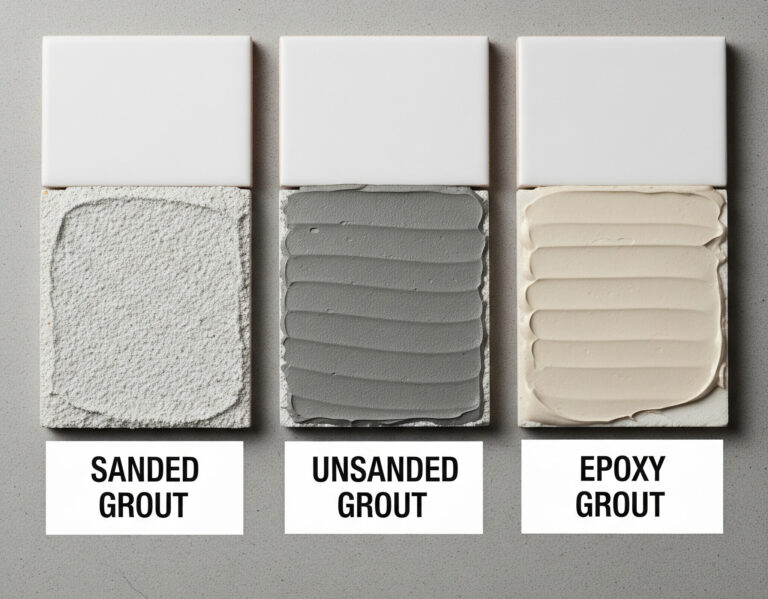
1. Sanded Grout
What it is: A cement-based grout mixed with sand.
Properties:
Durable and resistant to shrinking or cracking
Slightly rough texture due to sand particles
Available in many colours
Best Applications:
✔ Tile joints wider than 1/8 inch (floors, larger tiles)
✔ High-traffic areas like kitchens, entryways, and hallways
2. Unsanded Grout
What it is: Cement-based but smooth (no sand added).
Properties:
Creamy, easy to spread
Shrinks more than sanded grout
Not as strong under heavy use
Best Applications:
✔ Narrow joints 1/16 to 1/8 inch wide
✔ Walls, backsplashes, bathrooms
✔ Soft or delicate tiles (like glass or polished marble) that could be scratched by sand
3. Epoxy Grout (our preferred option based on our Experience)
What it is: A two-part system made of epoxy resin and hardener.
Properties:
Extremely durable and stain-resistant
Waterproof—doesn’t need sealing
Harder to work with and more expensive
Best Applications:
✔ Areas exposed to moisture and stains (bathrooms, showers, kitchens, countertops)
✔ Commercial or industrial spaces
✔ Places needing long-lasting, low-maintenance grout
Sealing Considerations
Cement-based grouts (sanded & unsanded): must be sealed after curing, and resealed every 1–2 years.
Epoxy grouts: Naturally resistant and don’t need sealing.
Choosing the Right Grout for Your Home
The right grout depends on your tile type, joint width, and location. Using the wrong grout can lead to:
Stains that won’t come out
Cracks from shrinkage or movement
Tiles lifting or edges chipping
At FGS Tile & Grout, we help homeowners across Toronto, Markham, Vaughan, Richmond Hill, Ajax, and Whitby – GTA & Durham Region choose the right grout, install it correctly, and maintain it for years to come.
Need help with grout repair, sealing, or restoration?
Book a service with our team today and get grout that looks beautiful and lasts.